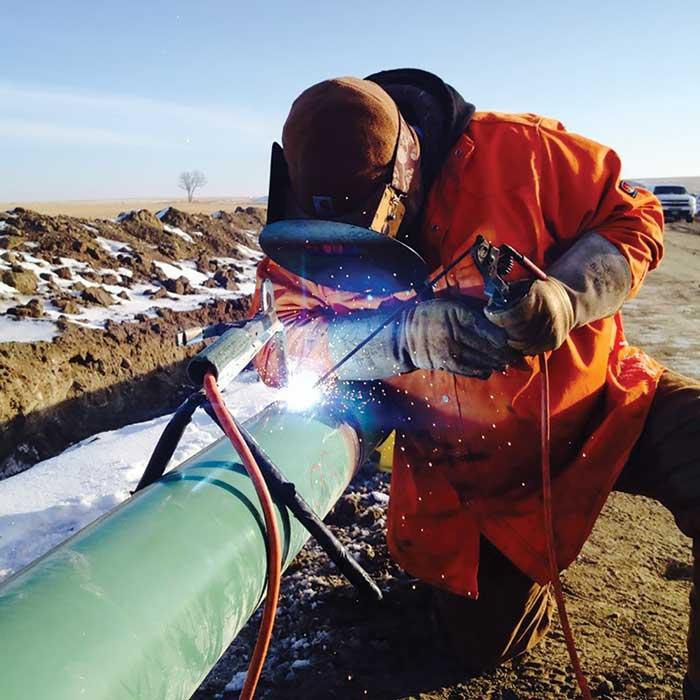
Ideal Practices for Pipeline Welding Evaluation: Strategies, Specifications, and Procedures to Attain Quality Control and Conformity
Efficient pipeline welding examination is necessary for guaranteeing the integrity and security of essential facilities. Recognizing the complexities entailed in each stage of assessment is important to attaining compliance and integrity in pipe systems.
Relevance of Welding Examination
The honesty of welded joints is vital in guaranteeing the safety and dependability of pipe systems. Correct welding techniques and complete assessment procedures are vital to avoid failings that can bring about catastrophic occurrences, environmental damage, and death. Pipeline Welding Inspection. Welding assessment acts as a precautionary action, recognizing defects such as fractures, porosity, and incomplete blend prior to they escalate into major issues
In addition, pipeline systems typically operate under high pressure and extreme problems, making the top quality of welds even a lot more vital. Governing conformity is another considerable facet, as different requirements dictate the quality guarantee processes that have to be complied with in pipe construction and upkeep. Failure to comply can cause legal ramifications and financial losses.

The function of welding inspection extends past simple verification of handiwork; it incorporates the assurance of lasting functional honesty. This includes an organized approach that consists of not only aesthetic evaluations however also advanced non-destructive screening approaches. Eventually, efficient welding inspection is a financial investment in the longevity and safety and security of pipe systems, guaranteeing they function as intended while lessening risks connected with product deficiencies.
Trick Assessment Techniques
Aesthetic inspection, often the initial line of defense, enables for the recognition of surface area defects such as splits, damages, and porosity. Ultrasonic testing employs high-frequency audio waves to spot inner imperfections, offering a detailed analysis of weld honesty. This non-destructive technique is particularly effective for determining discontinuities that may not show up externally.
Radiographic screening entails making use of X-rays or gamma rays to generate photos of the bonded joint, exposing internal problems. This technique supplies comprehensive insights however might require specific devices and security factors to consider. Lastly, magnetic bit testing works for spotting surface and near-surface stoppages in ferromagnetic products, utilizing electromagnetic fields and great iron fragments.
Market Standards and Regulations
Compliance with industry criteria and laws is crucial for making sure the quality and safety of pipeline welding inspections. These requirements provide a structure for ideal methods in welding processes, materials, and evaluation methods, permitting organizations to minimize defects and boost the integrity of pipeline systems. Secret bodies such as the American Society of Mechanical Engineers (ASME), the American Welding Culture (AWS), and the International Company for Standardization (ISO) state standards that are commonly recognized and taken on within the sector.
In the USA, laws from the Pipe and Hazardous Materials Safety Management (PHMSA) govern the safety and security of pipe operations, mandating strenuous assessment methods. These requirements not only offer to safeguard public security and the atmosphere however additionally ensure conformity with contractual and lawful commitments. Adherence to the pertinent codes, such as ASME B31.3 for process piping, is crucial for keeping operational performance and regulatory conformity.
Additionally, continuous updates and modifications to these criteria show technical advancements and progressing sector techniques, emphasizing the need for companies to remain informed and train employees appropriately. Eventually, durable compliance with well established criteria cultivates count on and dependability in pipeline framework, safeguarding both stakeholders and possessions.
Effective Inspection Procedures
Effective inspection treatments are critical for identifying possible defects in pipe welds and making certain the general stability of the system. A methodical strategy to examination includes several essential phases, consisting of pre-weld, in-process, and post-weld examinations. Each stage plays a vital role in preserving top quality guarantee.
During pre-weld assessment, it is important to review the products and joint More Help configurations, making sure conformity with job specs. In-process examinations entail keeping track of welding methods and criteria, such as warm input and travel speed, to stop problems from occurring. This phase enables real-time adjustments to welding practices.
Post-weld examinations include non-destructive screening (NDT) strategies like radiography, ultrasonic screening, and magnetic bit testing. These approaches assist identify inner and surface area defects that can compromise this article the pipeline's performance. Documentation of all inspection activities is vital, providing a deducible document that sustains compliance with sector standards.
Training and accreditation of evaluation employees better boost the effectiveness of these procedures. By sticking to an organized inspection protocol, organizations can reduce risks, ensure conformity, and inevitably supply pipes that satisfy stringent security and performance needs.
Common Obstacles and Solutions
Pipe welding evaluation provides several common difficulties that can influence the quality and safety and security of the final item. One significant difficulty is the irregularity in welding techniques and products, which can lead to inconsistent weld top quality. To address this, it is essential to develop standardized procedures and training for welders, making sure an uniform technique across projects.
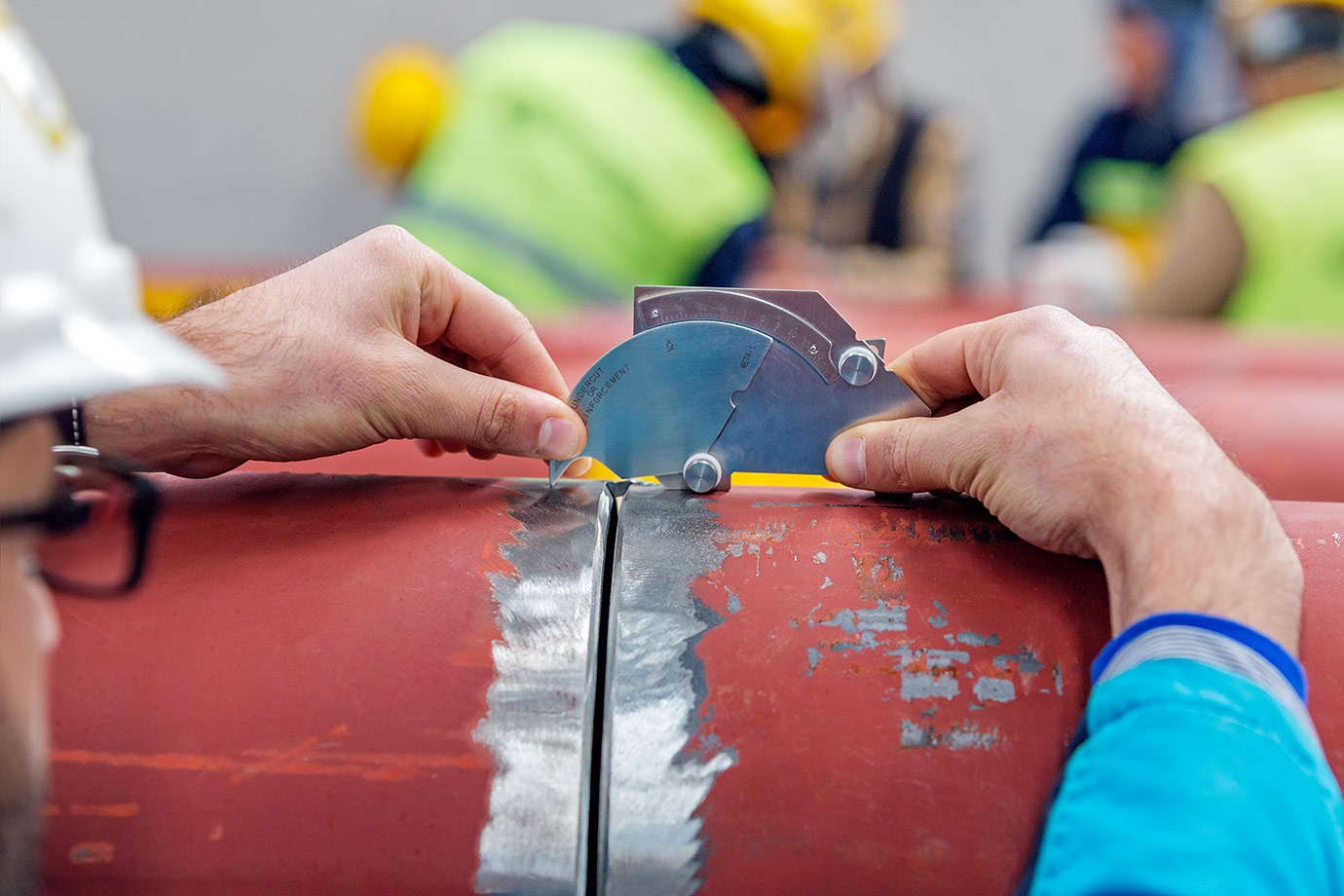
Environmental aspects, including temperature and humidity, can likewise impact the welding process, possibly causing cracks or insufficient combination. Implementing regulated environments and sticking to pre-weld treatments can alleviate these risks.
Final Thought
In conclusion, the implementation of ideal methods for pipeline welding examination is important for making certain quality control and conformity with industry standards. A comprehensive method, incorporating different strategies such as visual, ultrasonic, and radiographic testing, promotes the recognition of flaws throughout all stages of the welding procedure. Pipeline Welding Inspection. Adherence to developed laws and reliable examination treatments not just boosts the reliability and security of pipeline systems but also mitigates threats connected with welding problems, consequently advertising overall operational integrity
Conformity with sector standards and policies is crucial for ensuring the quality and security of pipeline welding assessments. These criteria provide a framework for best practices in welding processes, materials, and assessment strategies, permitting companies to decrease defects and enhance the integrity of pipeline systems.In the United States, regulations from the Pipeline and Hazardous Materials Safety Administration (PHMSA) govern the safety of pipeline operations, mandating rigorous inspection protocols. A systematic approach to inspection encompasses several key phases, consisting of pre-weld, in-process, and post-weld inspections.In verdict, More Info the execution of ideal techniques for pipe welding assessment is necessary for making certain top quality guarantee and conformity with market standards.